

Polynucleotide Treatment
Polynucleotides for anti-ageing and skin rejuvenation at DrBK Clinic in Reading and Harley St
Powerful skin regeneration, scientifically proven to regenerate the skin from within
Polynucleotides are an injectable skin booster predominantly used to reduce wrinkles, stimulate cellular regeneration, collagen synthesis, and tissue repair.
These skin-boosting and regenerative injectables have become a popular choice for patients looking to combat the signs of ageing and/or address common skin concerns, such as:
- Lifting and tightening the skin
- Improving skin texture and smoothness
- Brightening the skin
- Increasing volume within the skin
- Minimising acne scars
- Minimising stretch marks
- Minimising/restoring hair loss
Polynucleotide treatment at DrBK Clinic is led by Dr Bob Khanna, one of the UK’s most recognised aesthetic practitioners with over 30 years of clinical experience. A Save Face-accredited clinic, GDC-registered, and featured in Tatler’s guide to aesthetic medicine, DrBK offers polynucleotide treatment at our clinics in Reading and Harley Street, London.
Polynucleotide treatment cost at DrBK Reading & Harley St
This treatment is offered by both Dr Khanna (in Reading and Harley St) and Dr Rachel (in Reading). Please see the pricing for each below.
Dr Bob Khanna
Polynucleotides: £578 per session
Polynucleotides + HA Combo: £850 per session
Dr Rachel McCartney
Polynucleotides: £375 per session
Polynucleotides + HA Combo: £550 per session
Benefits of polynucleotides
Polynucleotide treatment delivers lasting improvement to the quality of your skin rather than a temporary fix. Instead of masking the signs of ageing, polynucleotides work with your skin’s own biology to repair, strengthen, and renew it from within.
- Visibly firmer, smoother skin: as collagen and elastin production increases, skin becomes noticeably more resilient and toned
- Deeper, longer-lasting hydration: polynucleotides improve the skin’s ability to retain moisture at a cellular level, giving a plumper, healthier appearance that lasts
- Improved skin texture and radiance: uneven tone, dullness, and rough texture are refined as the skin undergoes active cellular renewal
- Reduced fine lines and wrinkles: the gradual rebuilding of the skin’s support structure softens lines naturally, without freezing or filling
- Scar and stretch mark improvement: polynucleotides promote the kind of deep tissue repair that topical treatments simply cannot reach
- Natural-looking results: because the treatment works with your own biology, changes develop progressively and look entirely your own
- Minimal downtime: most patients return to daily life immediately, with only minor, short-lived redness at injection sites
- Long-lasting effect: results from a full course typically last 6-12 months, with ongoing skin quality improvements beyond the initial visible changes
What areas can be treated with polynucleotides?
Polynucleotides are one of the most versatile regenerative injectables available, and at DrBK we use them across a wide range of treatment zones. Because the treatment improves skin quality rather than adding volume, it’s suitable for areas where traditional fillers would be inappropriate or too heavy-handed.
Common treatment areas include:
- Face: cheeks, forehead, temples, and jawline for overall skin quality improvement and light firming
- Under eyes and periorbital area: to address crepiness, fine lines, dark circles, and early tear trough hollowing
- Neck and décolletage: an area that often shows age ahead of the face and responds well to regenerative treatment
- Hands: restoring hydration and improving the appearance of thinning, crepey skin on the back of the hands (available as part of the NuHands Protocol)
- Lips and lip lines: improving the texture and hydration of the lip area without adding volume
- Scalp: as part of hair loss treatment for patients experiencing diffuse thinning or early-stage hair loss
Treatment areas and the appropriate protocol will be confirmed at your consultation following a full assessment.
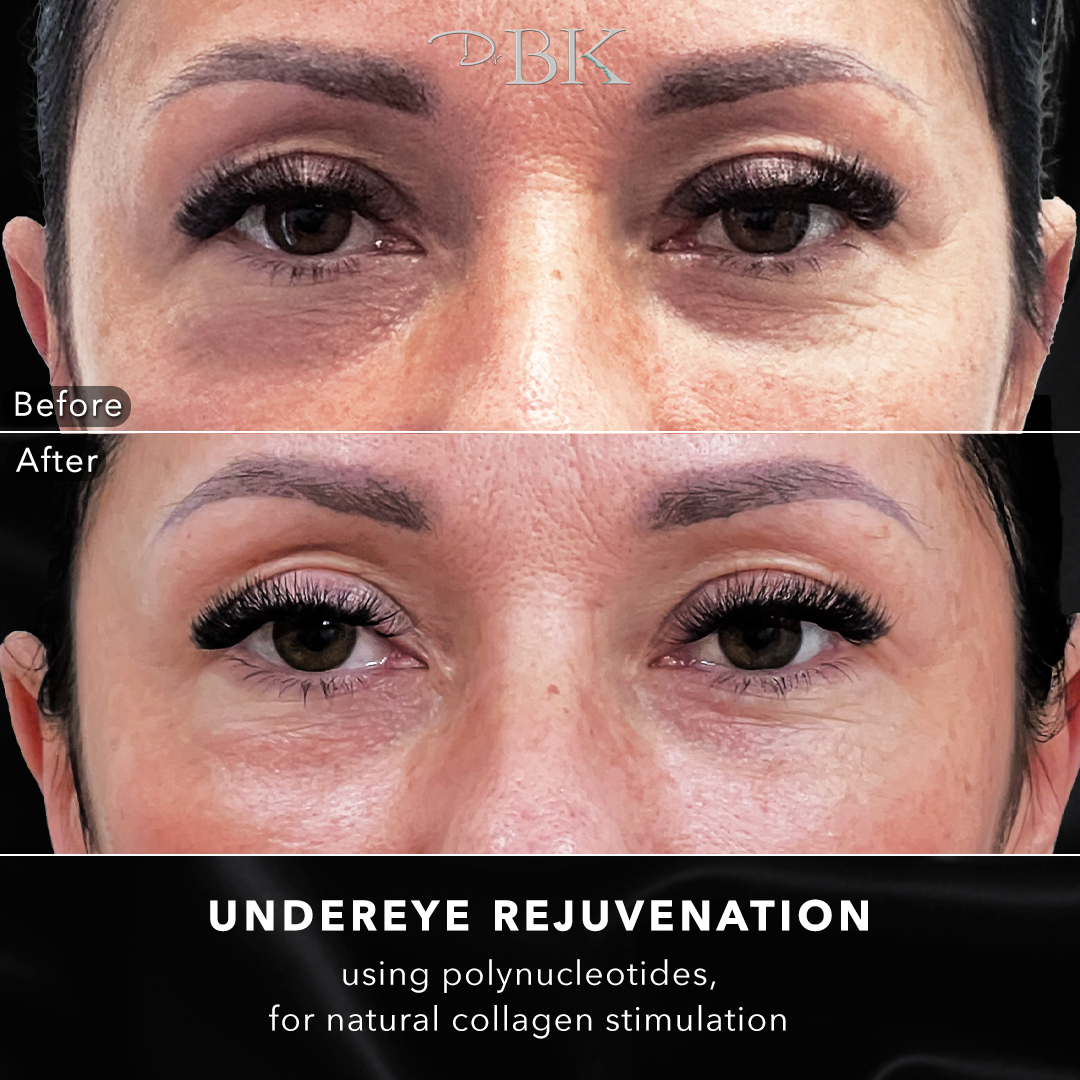
Popular: Polynucleotides under eyes
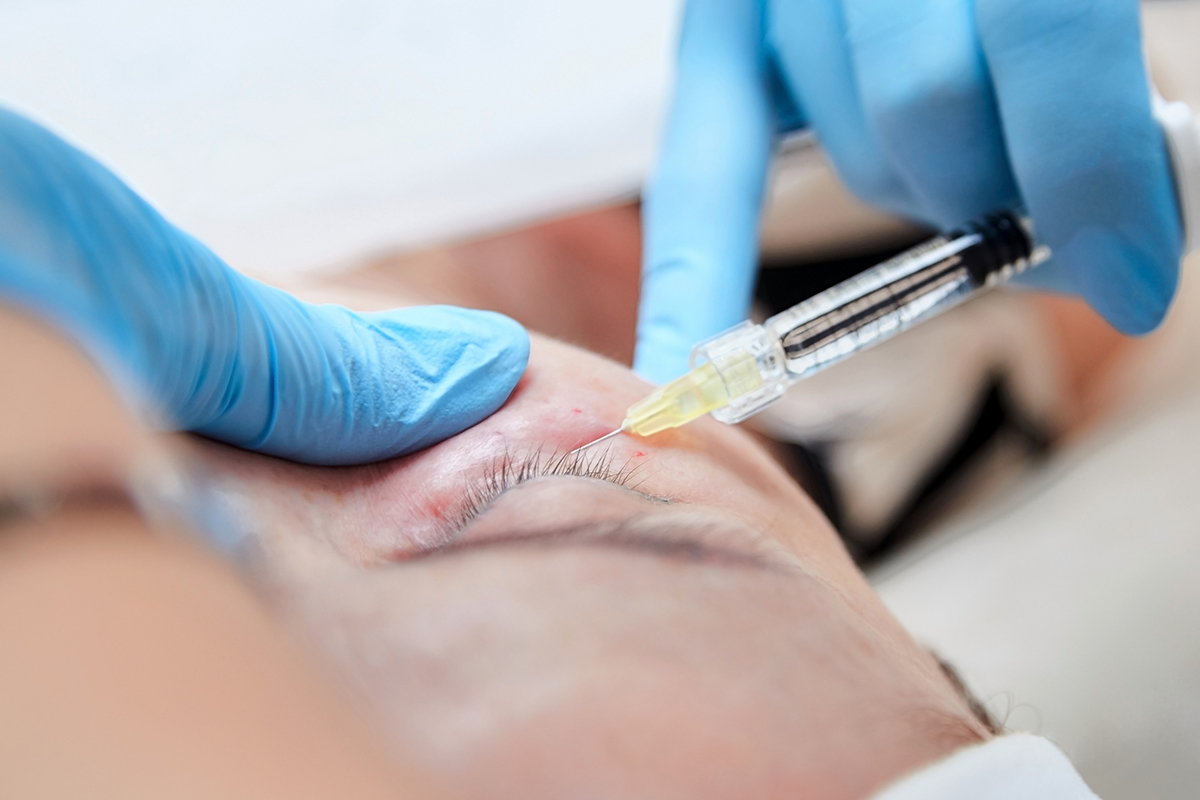
The under-eye area is one of the most requested treatment zones for polynucleotides, and one where the level of precision makes a significant difference to the outcome. The skin here is the thinnest on the face, with little subcutaneous fat and a complex underlying anatomy, which means both product choice and injection technique need to be adapted specifically for this zone.
Unlike dermal fillers, which can occasionally cause puffiness or a blue-grey discolouration (the Tyndall effect) when used beneath the eyes, polynucleotides add no bulk to the tissue. Instead, they work by improving the skin’s hydration, firmness, and cellular repair, which makes them an excellent option for crepiness, fine lines, persistent dark circles with a skin-quality component, and the early stages of tear trough hollowing where volume replacement is not yet appropriate.
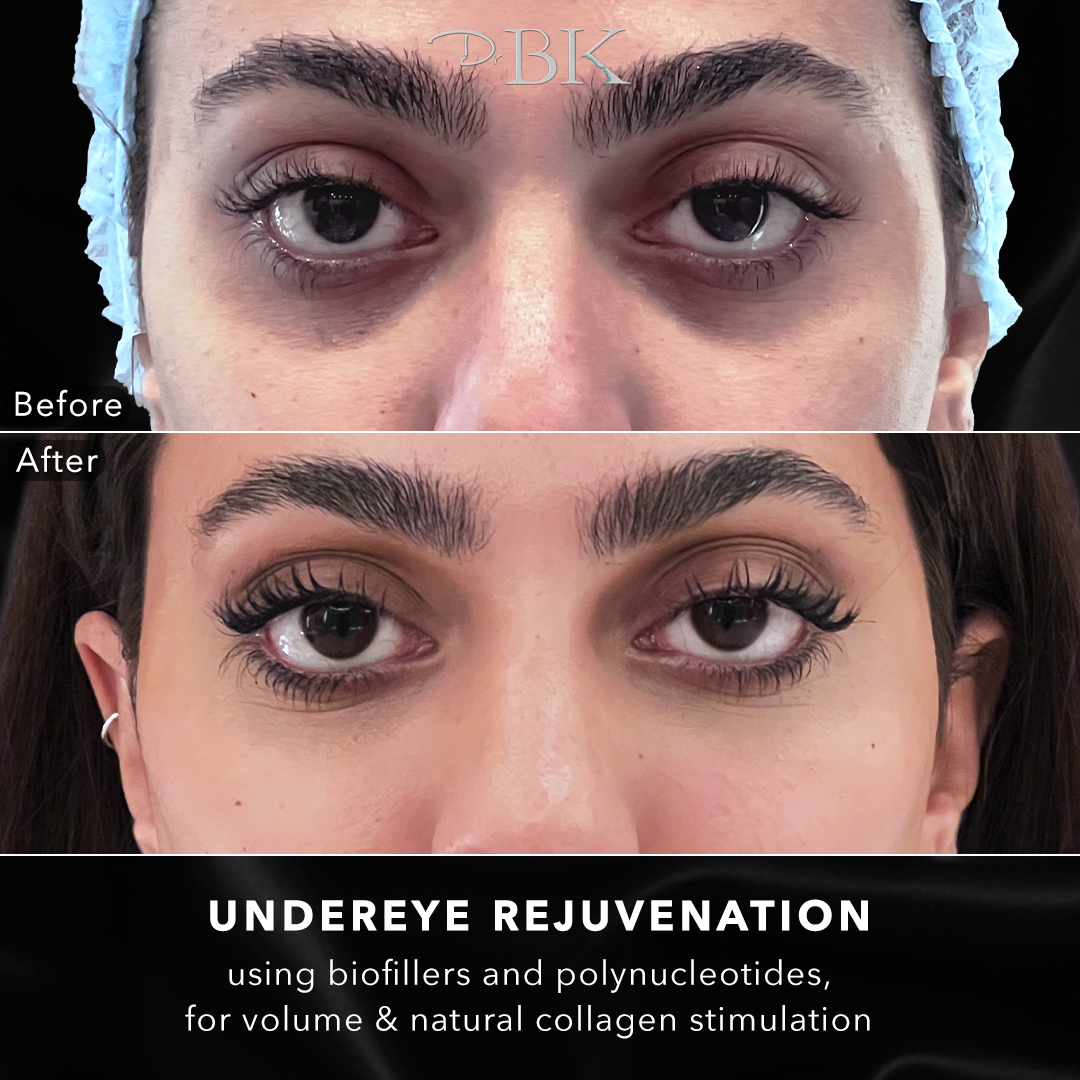
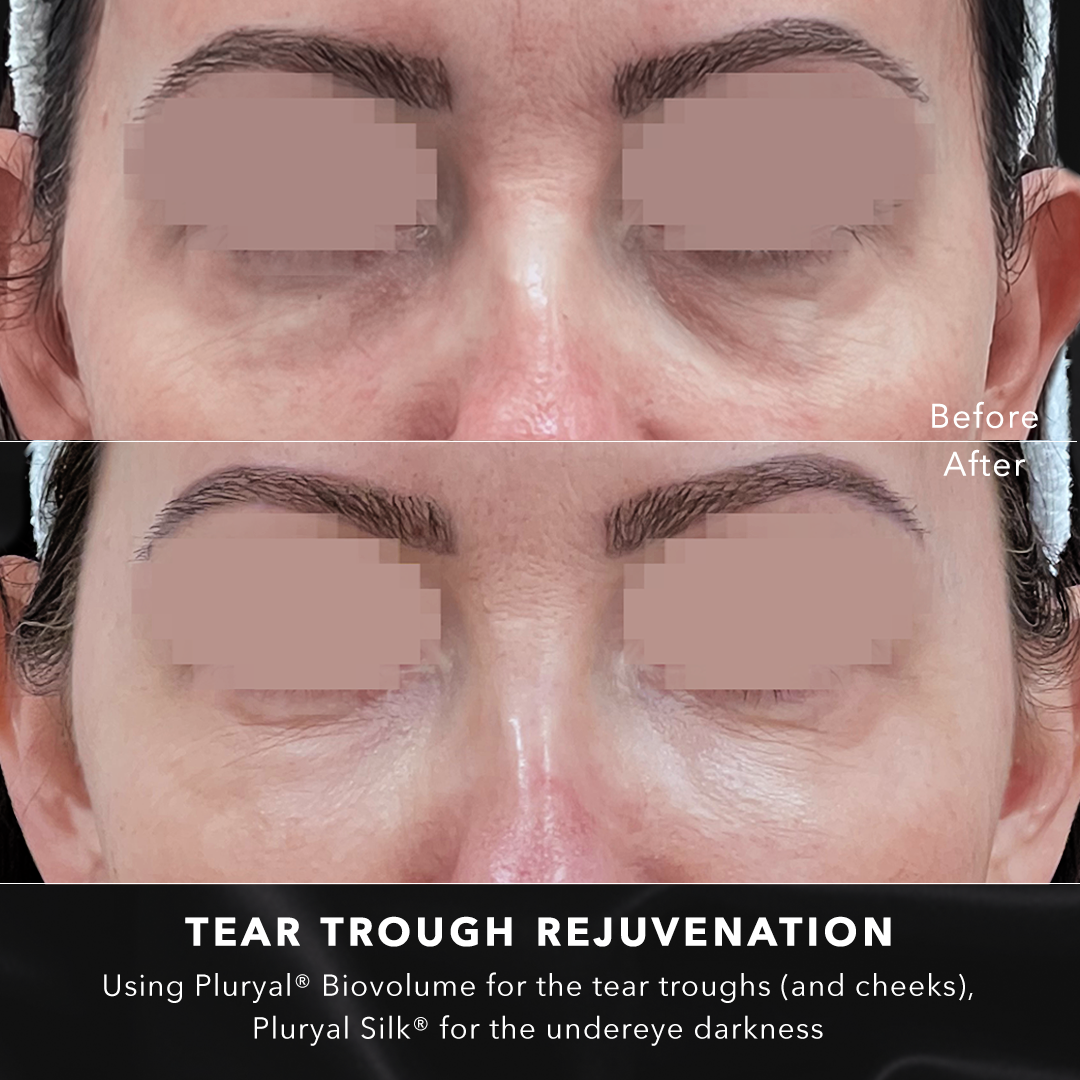
At DrBK clinic, we use lower product volumes and a more superficial injection depth in the periorbital area than in other facial zones. Results develop gradually over 3–6 weeks and are consistently natural-looking. For patients with more significant under-eye hollowing, polynucleotides can also be combined with a small amount of specialist tear trough filler as part of a tailored treatment plan.
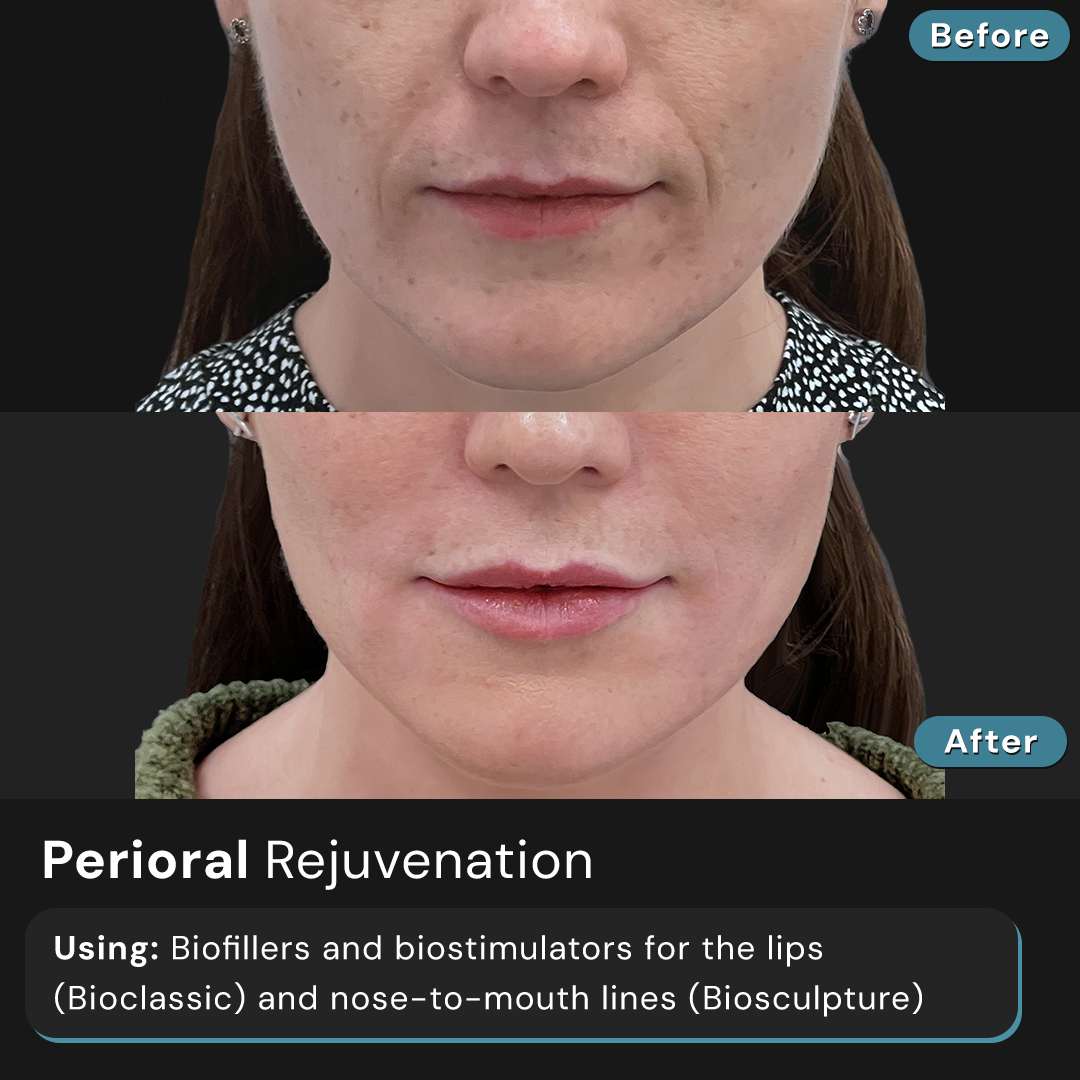
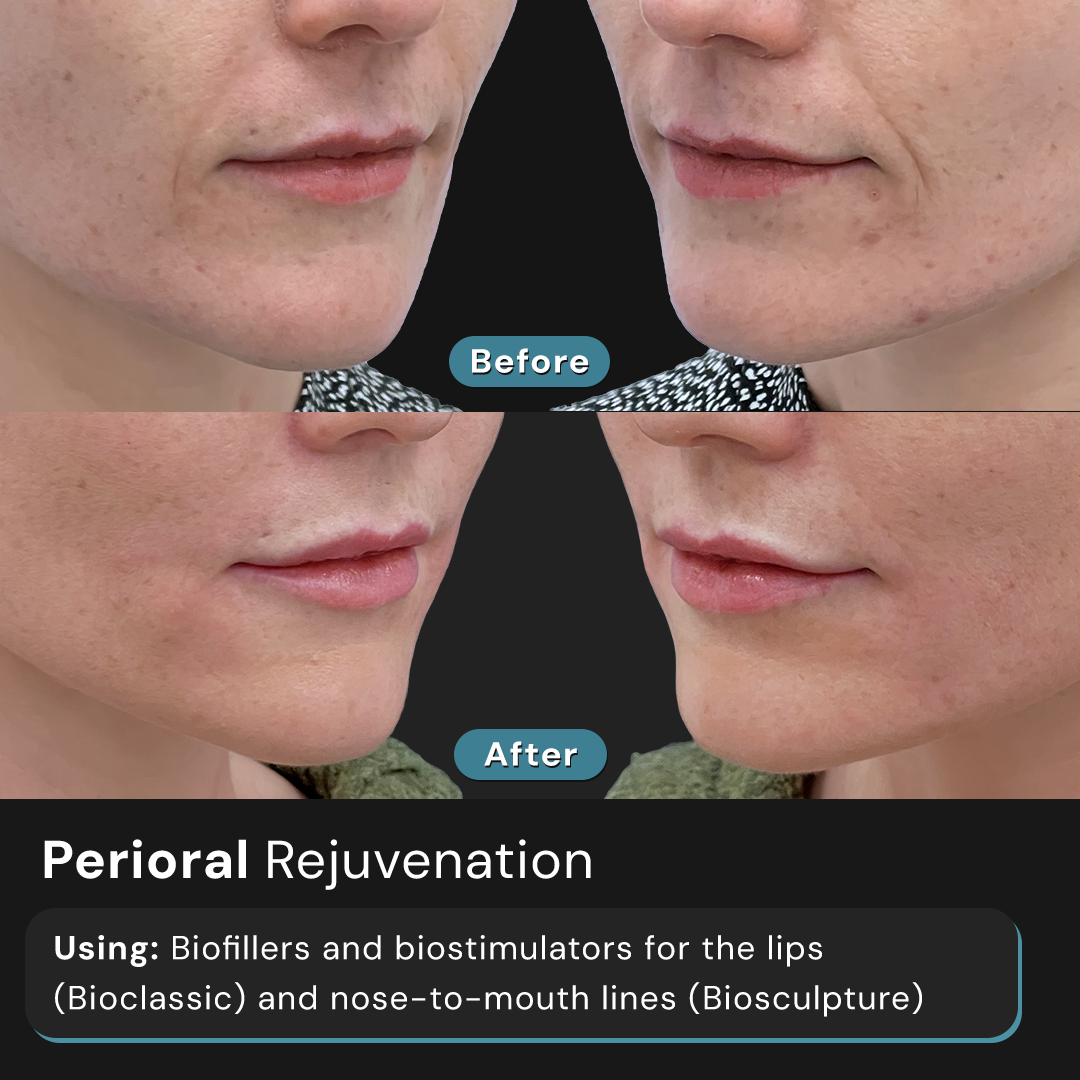
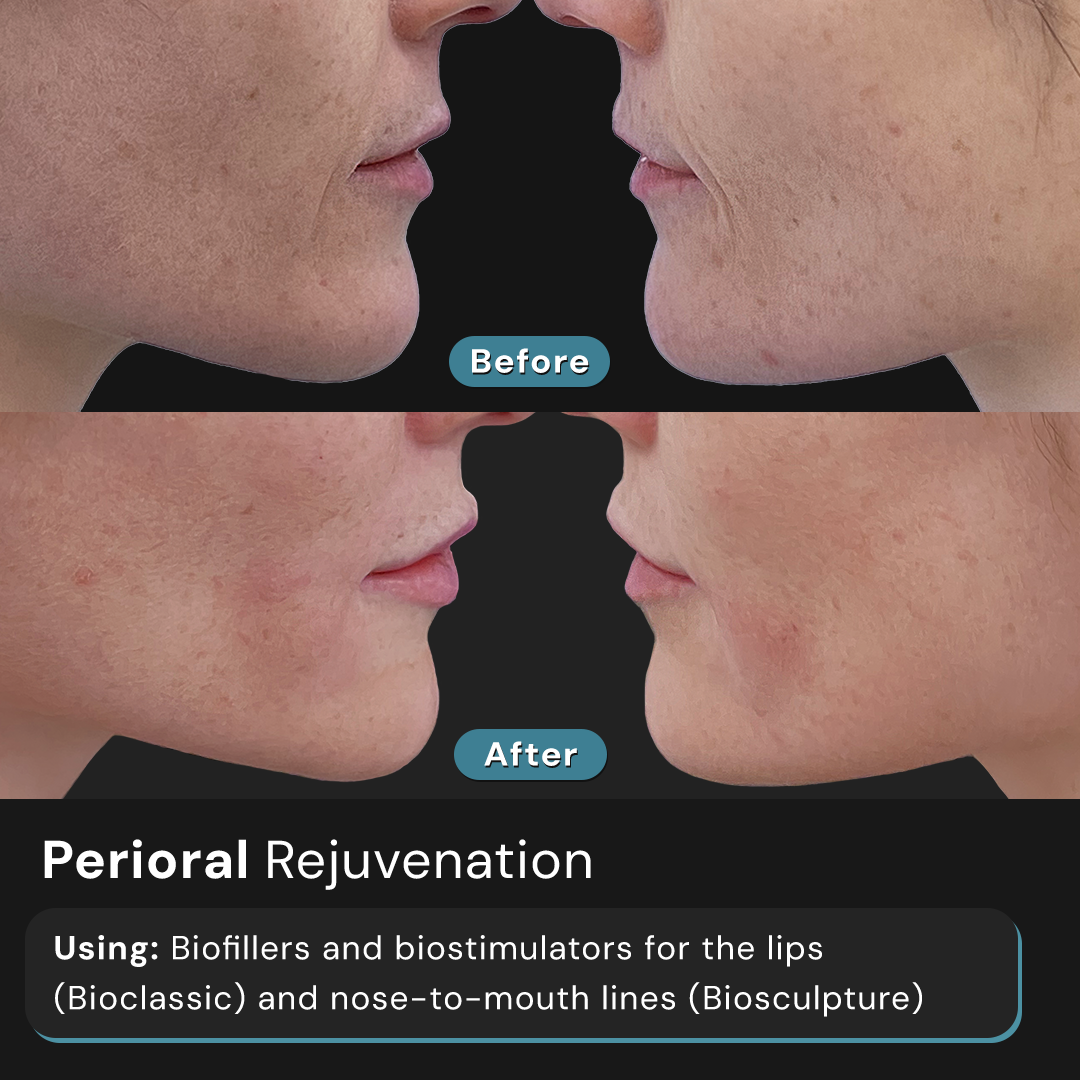
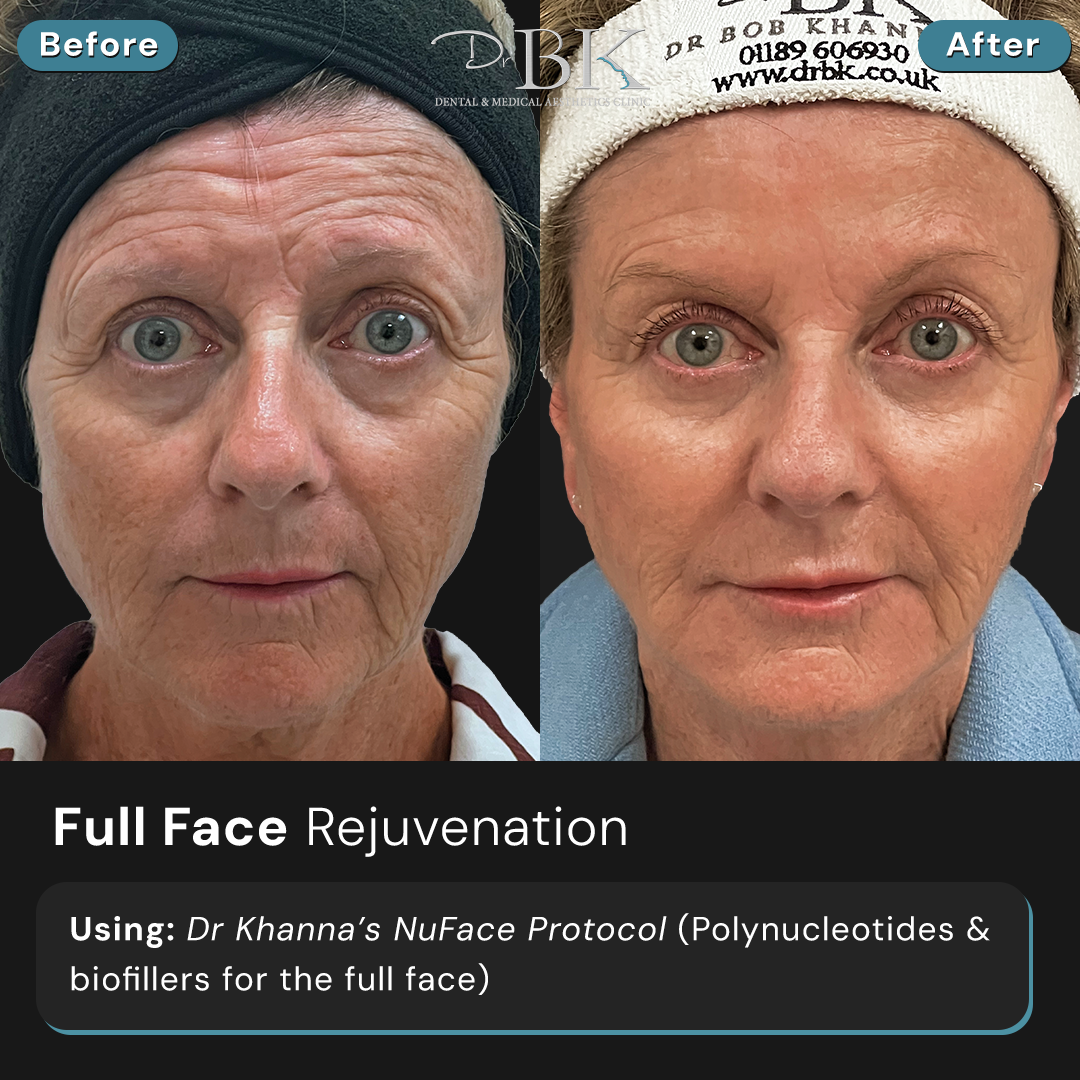
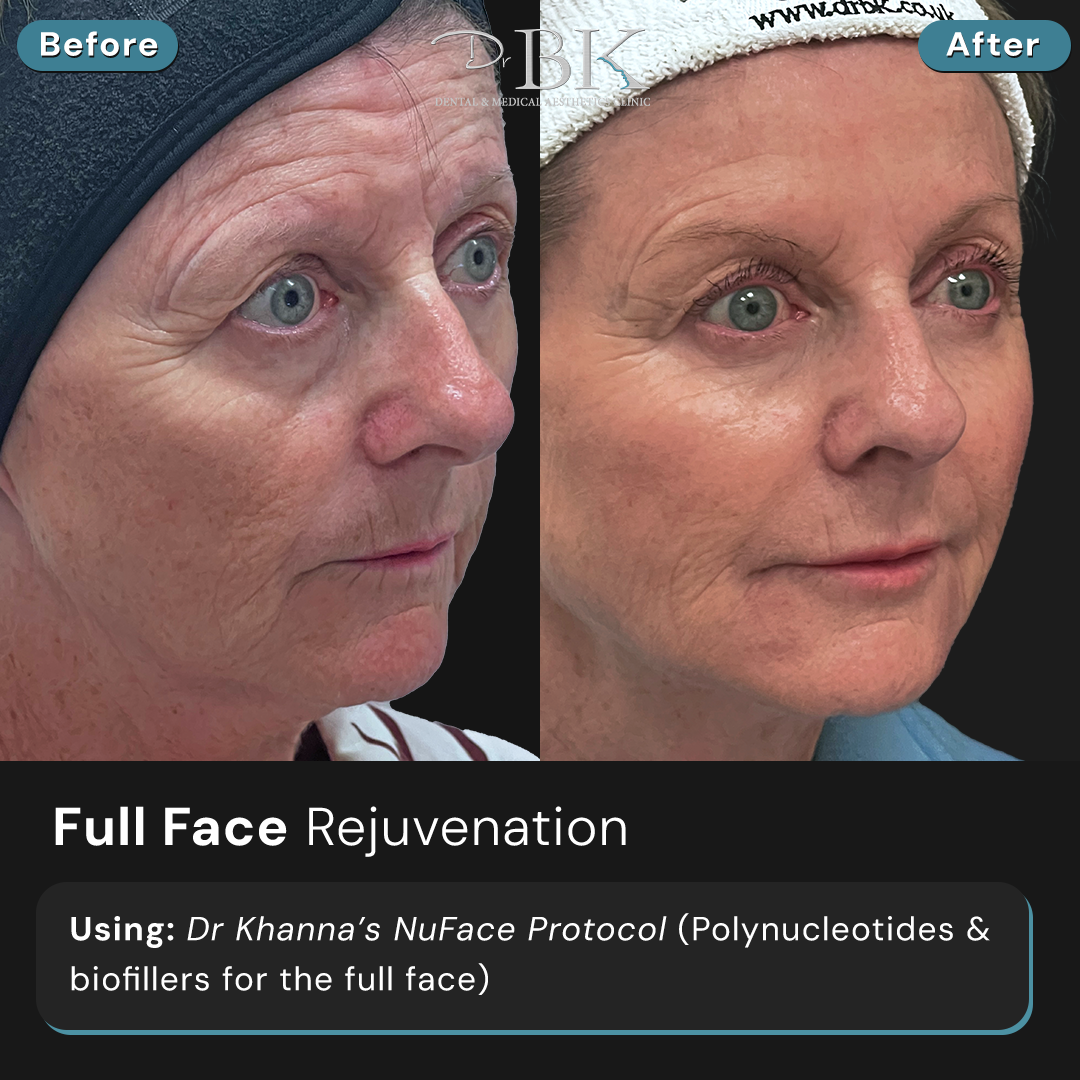
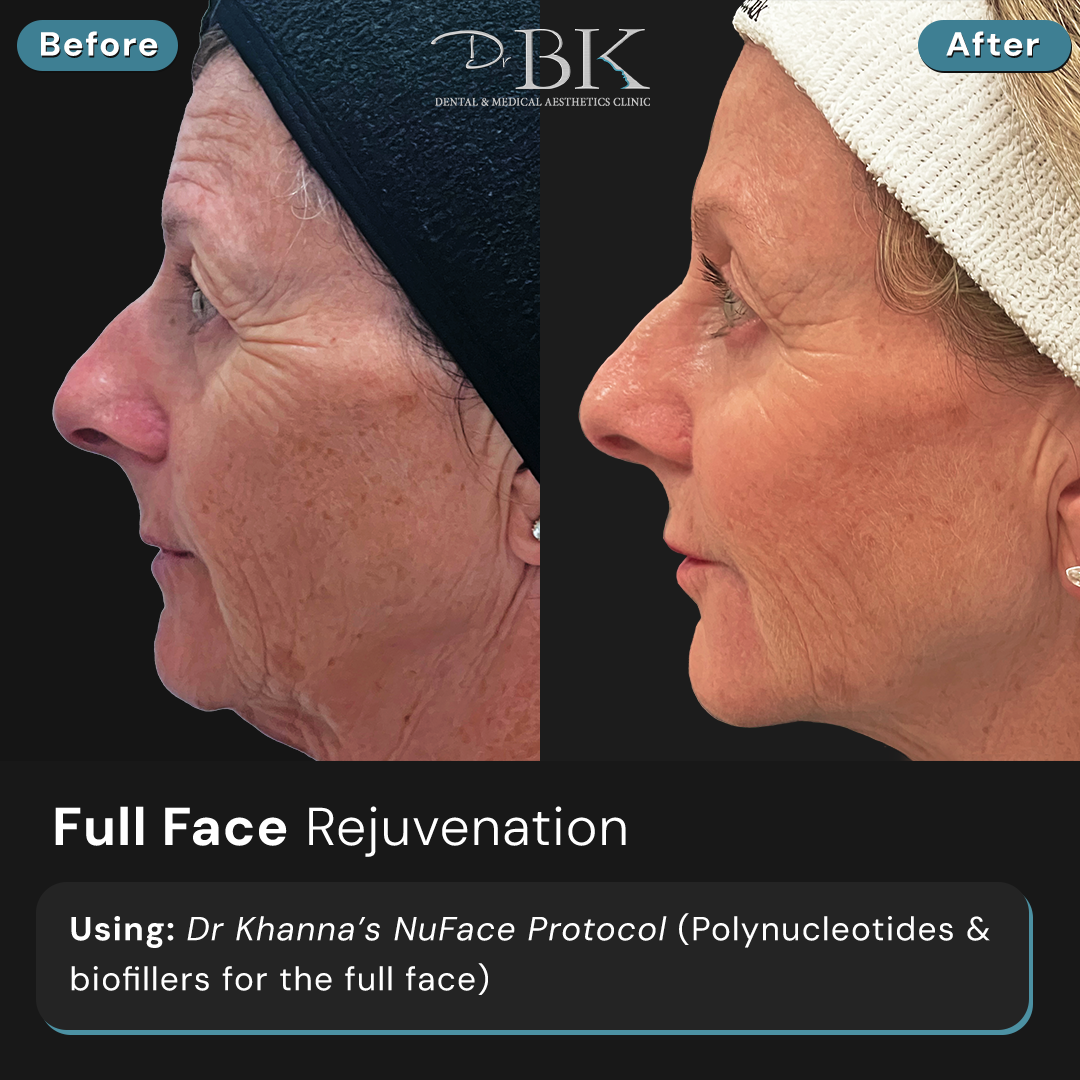
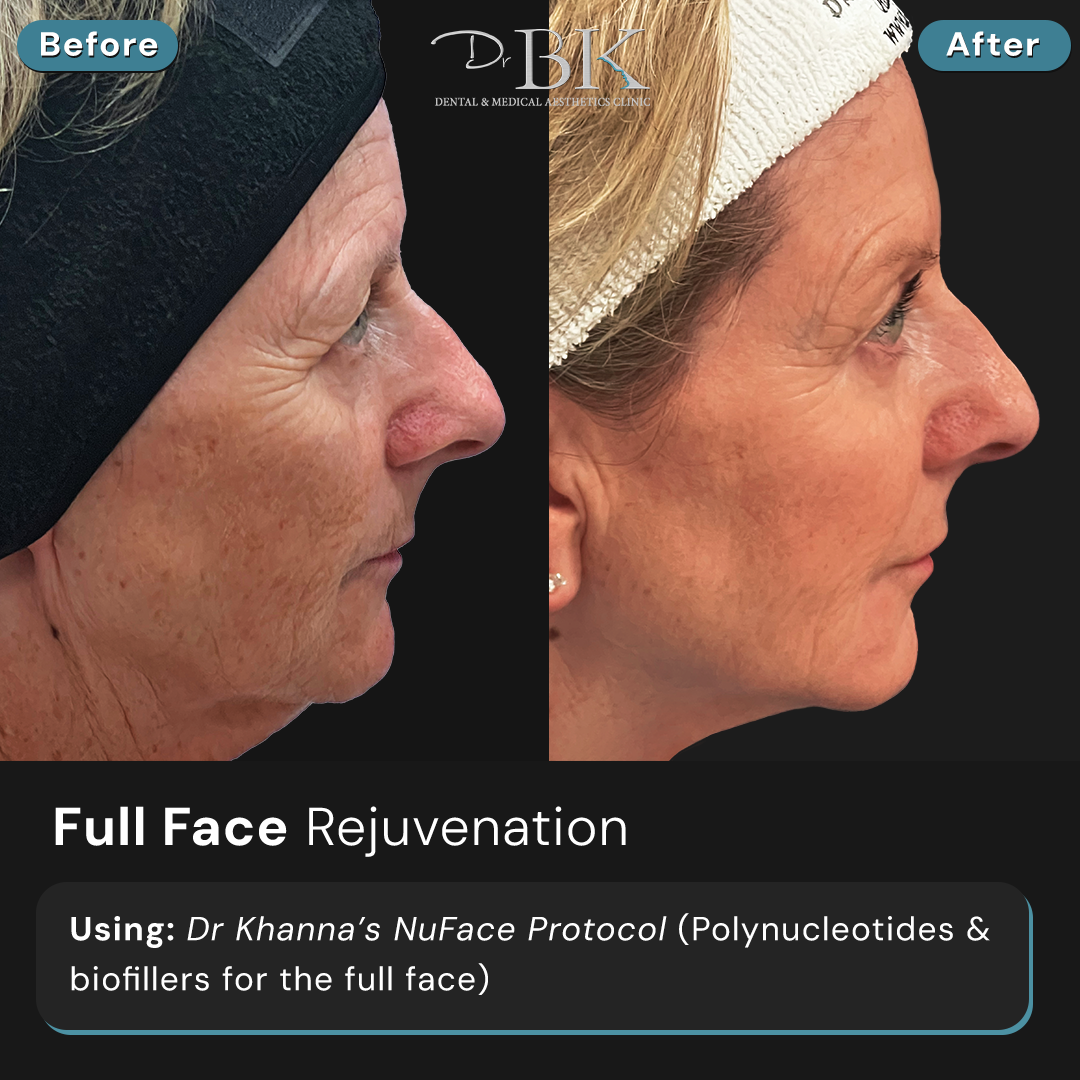
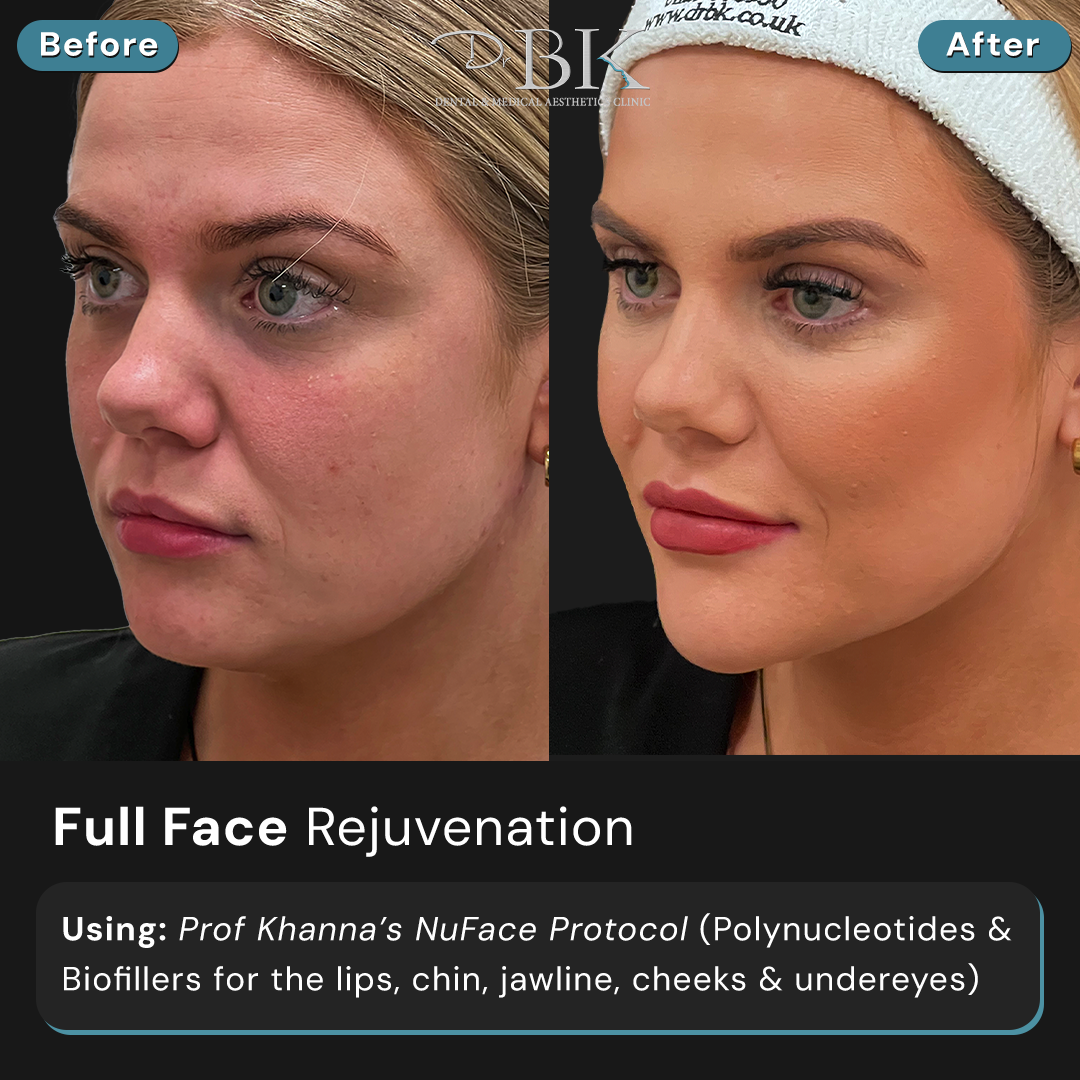
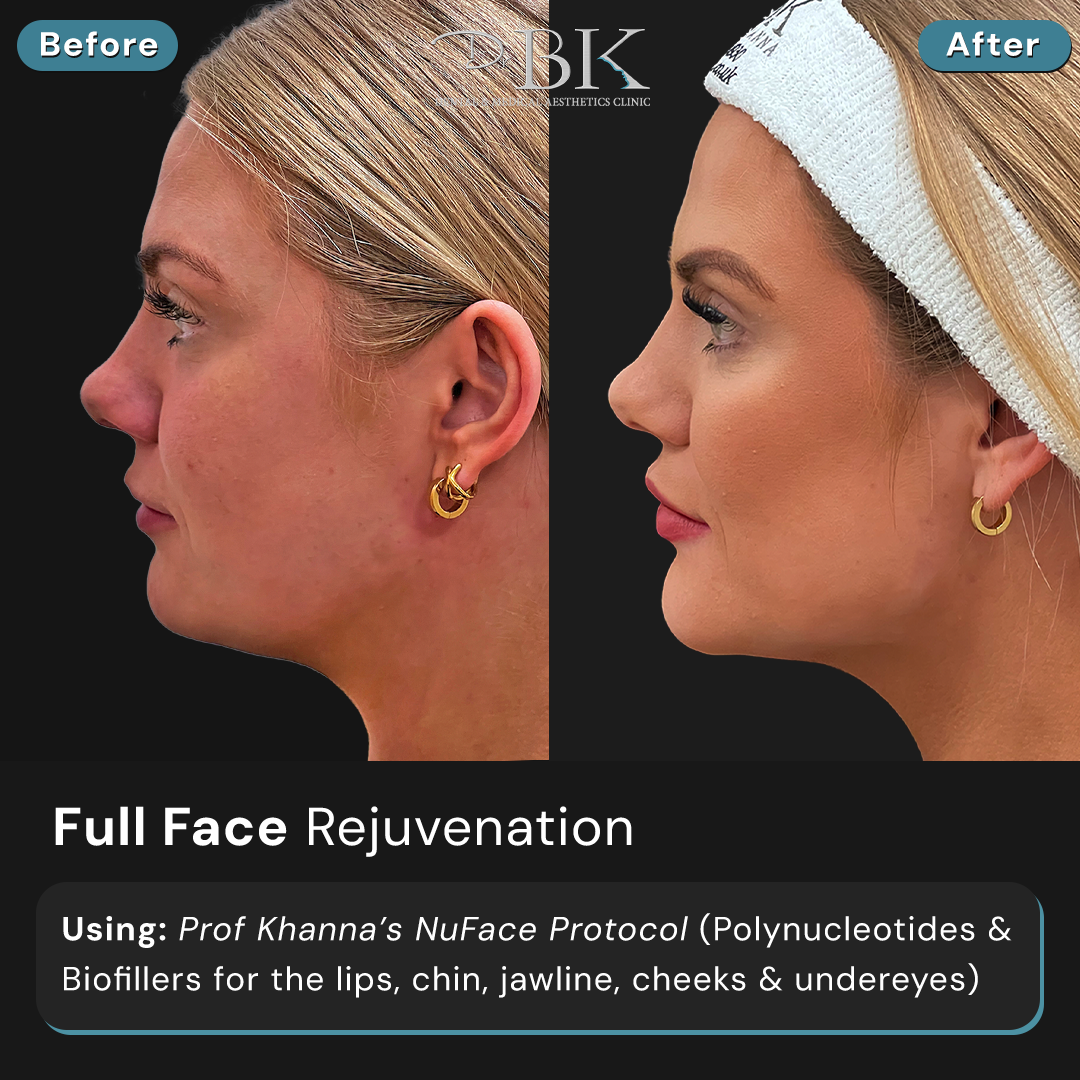
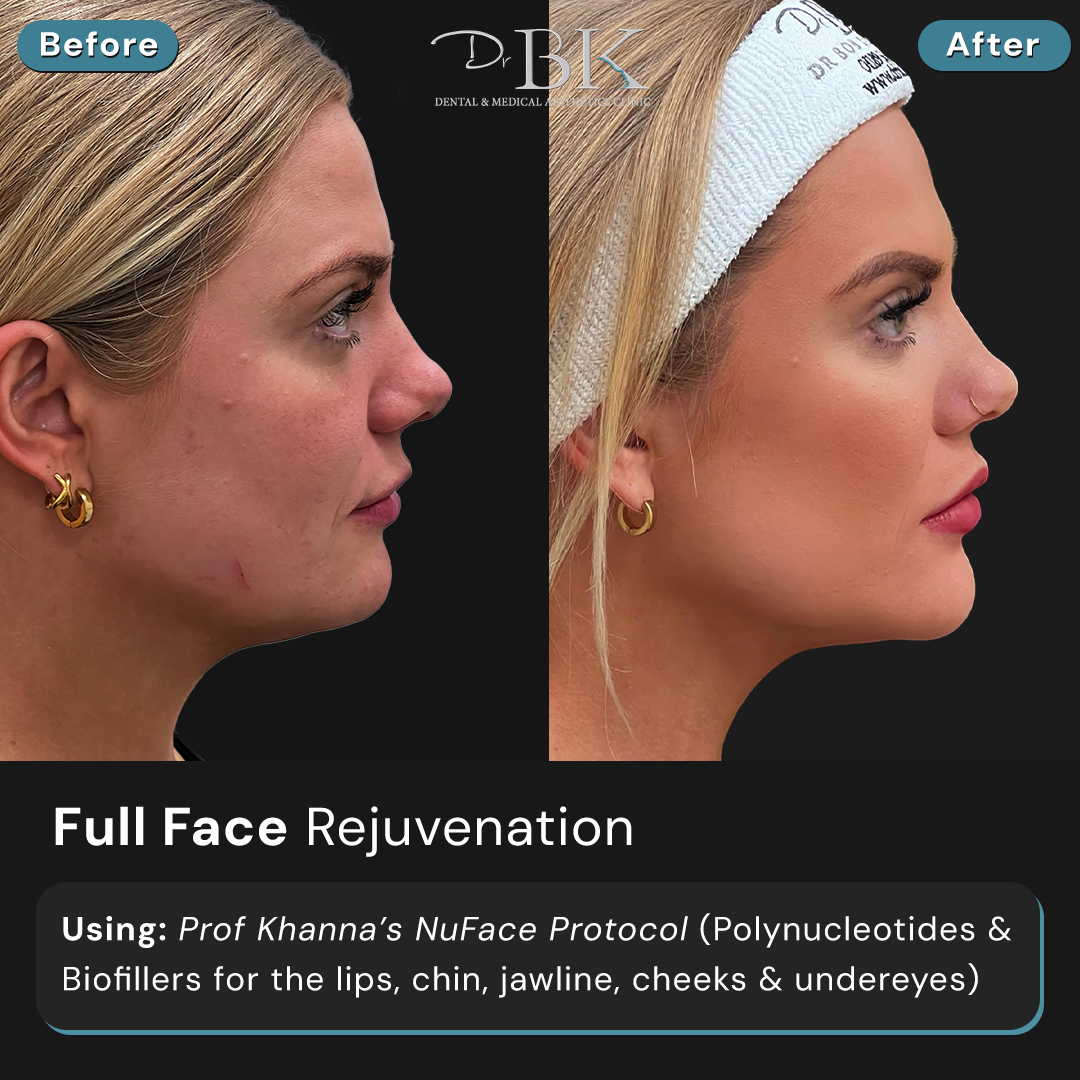
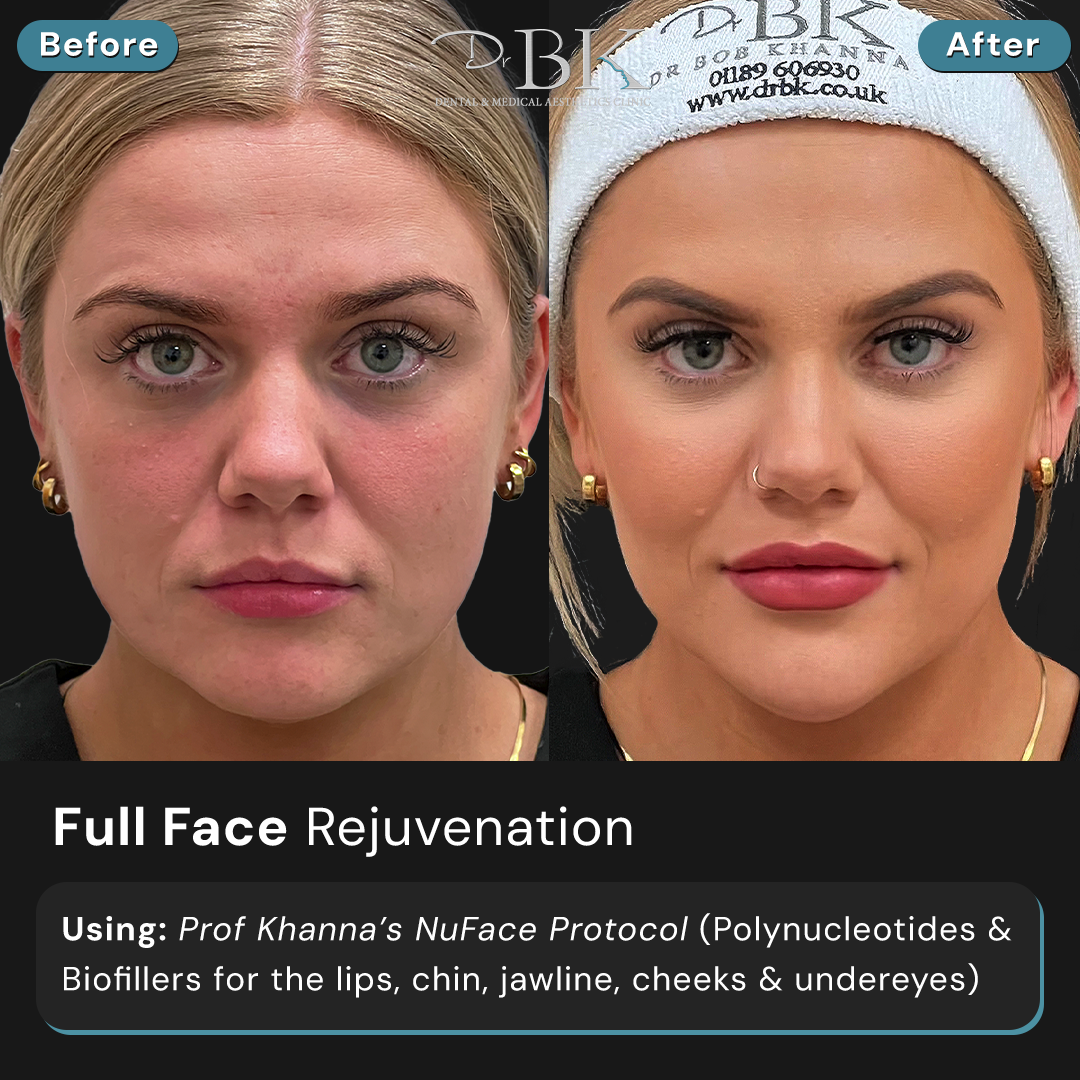
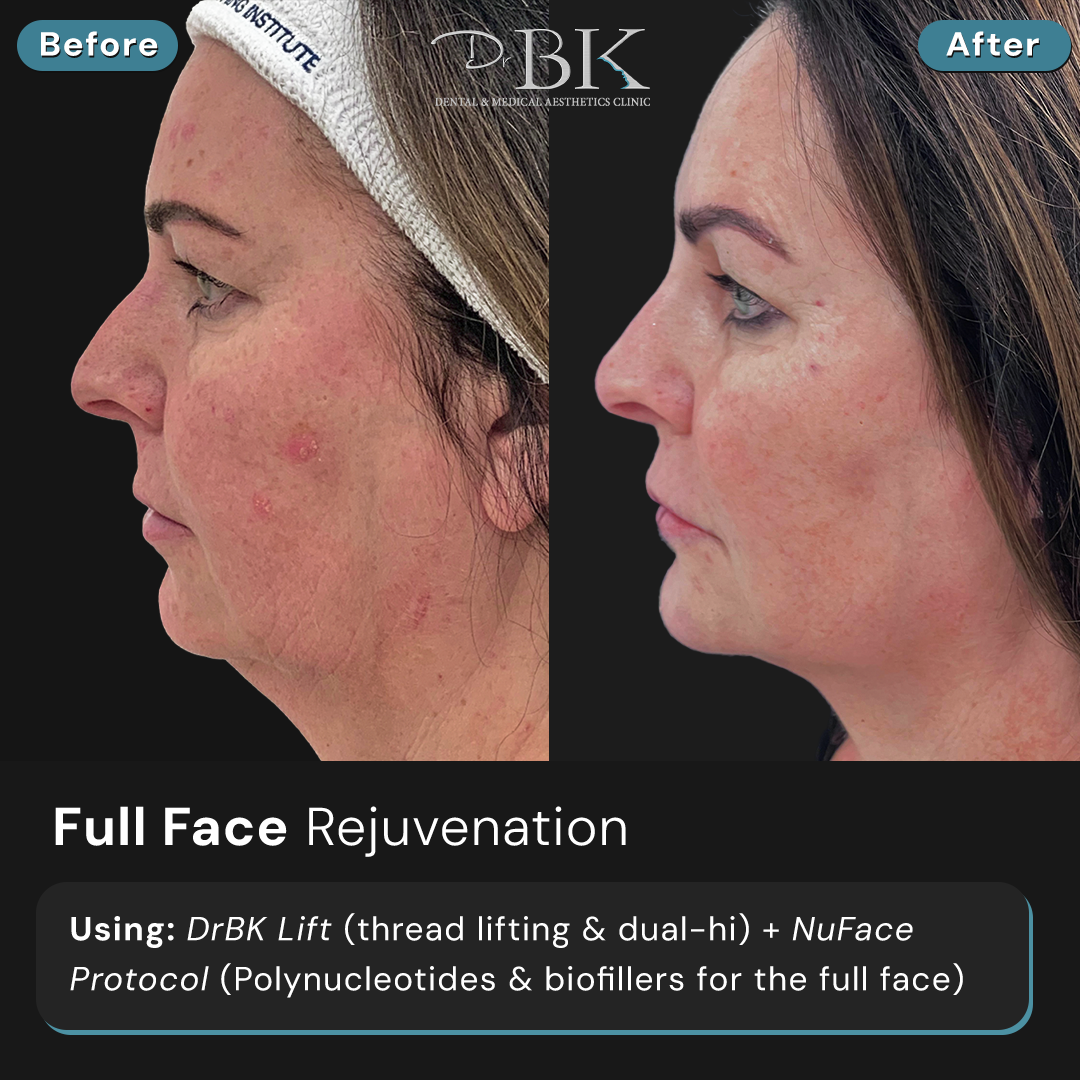
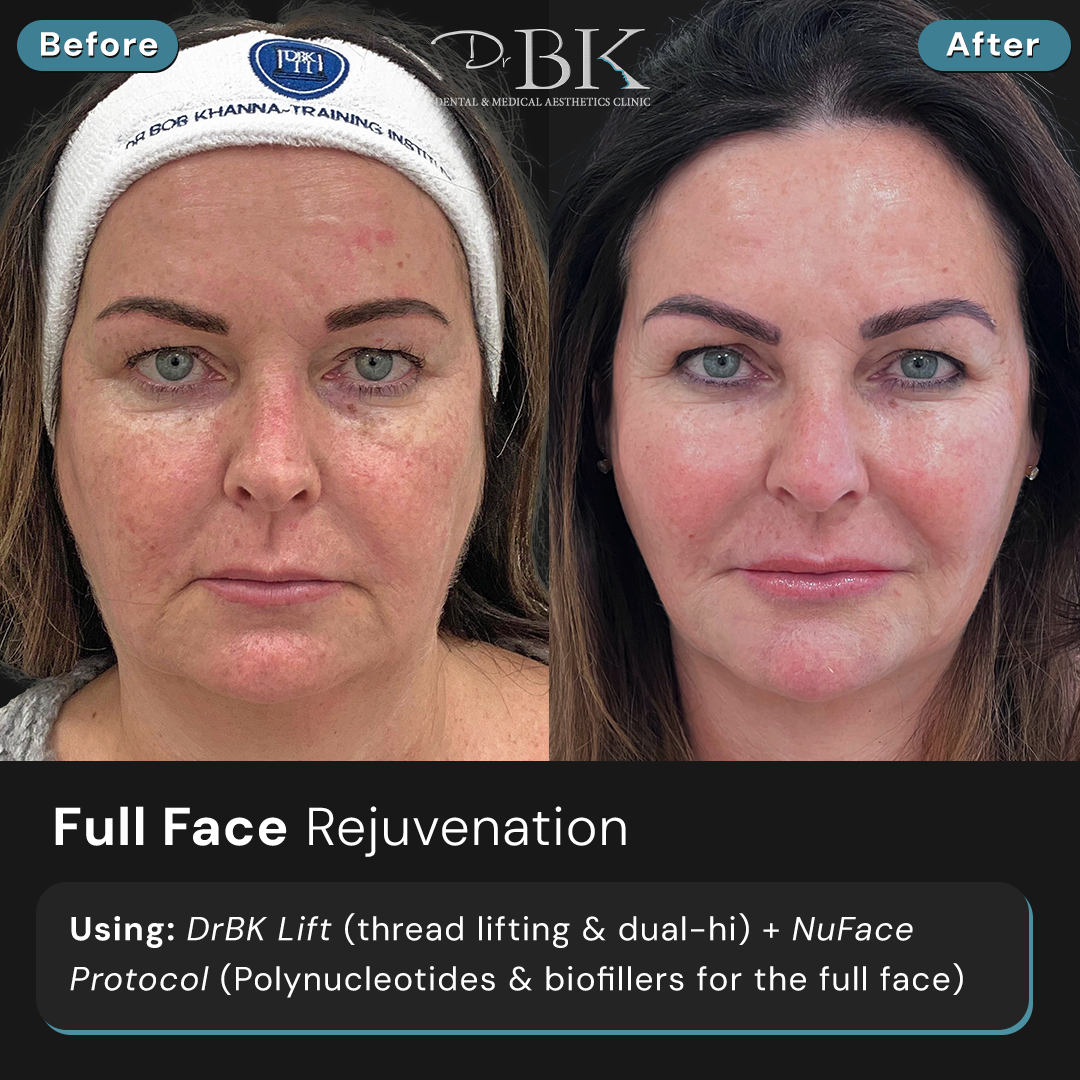
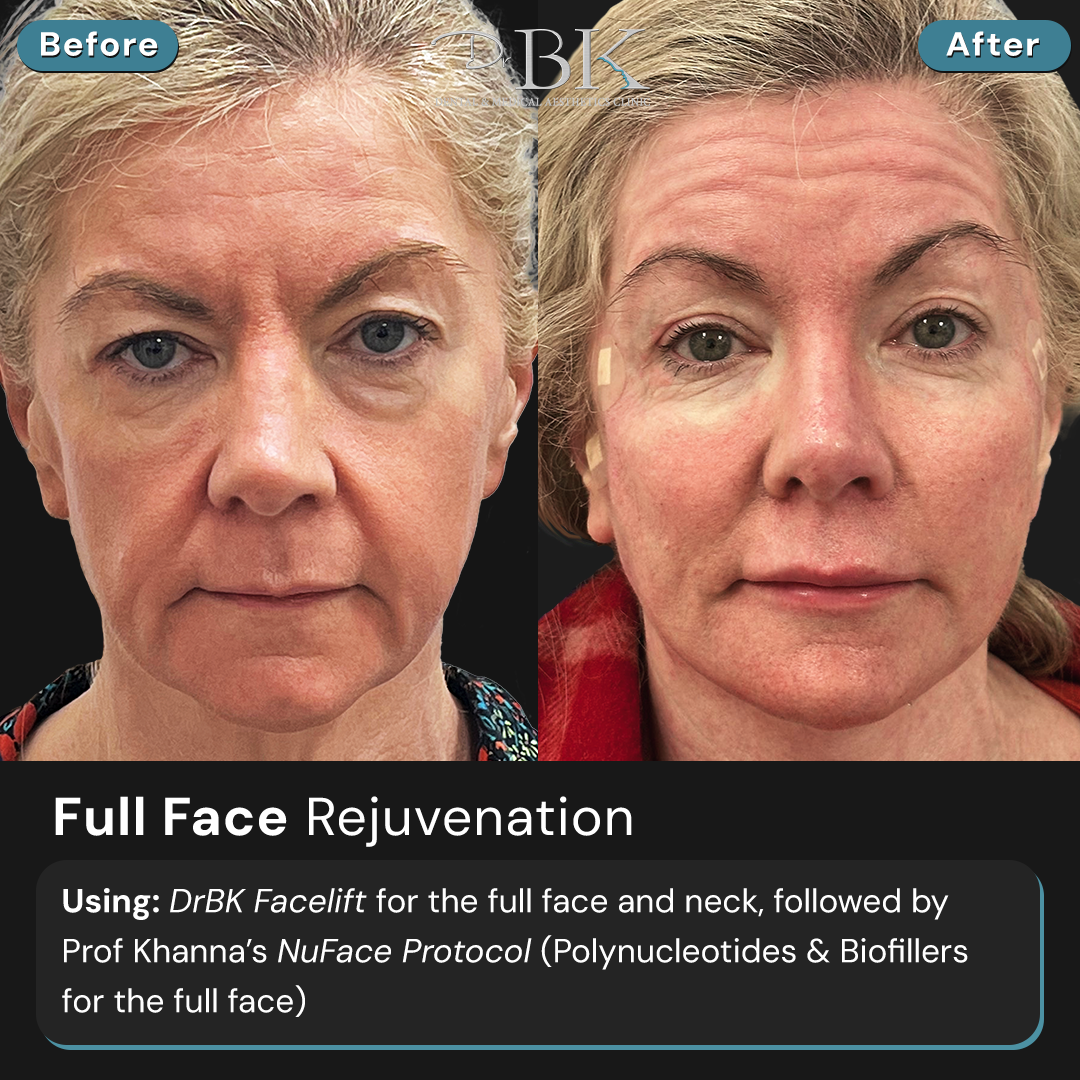
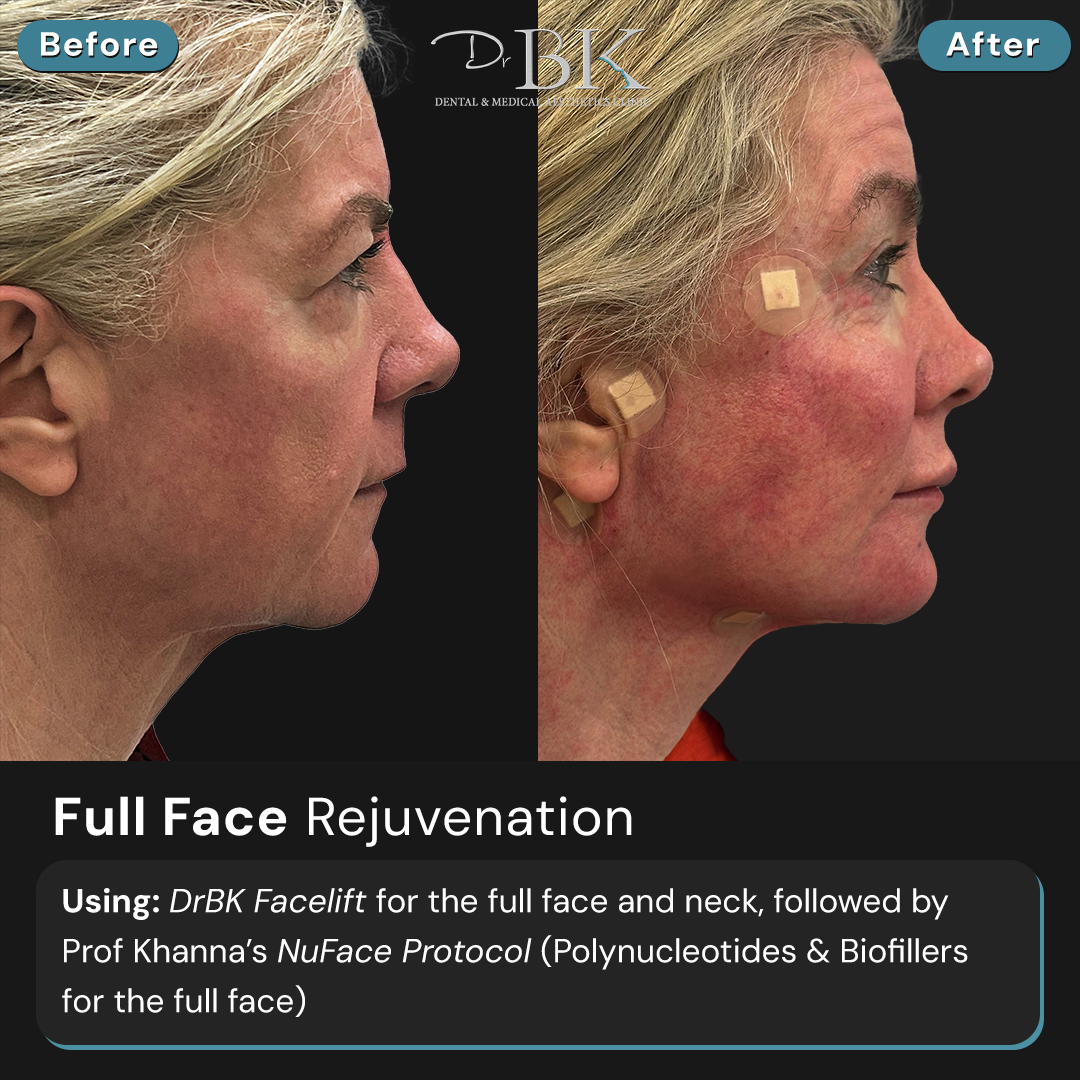
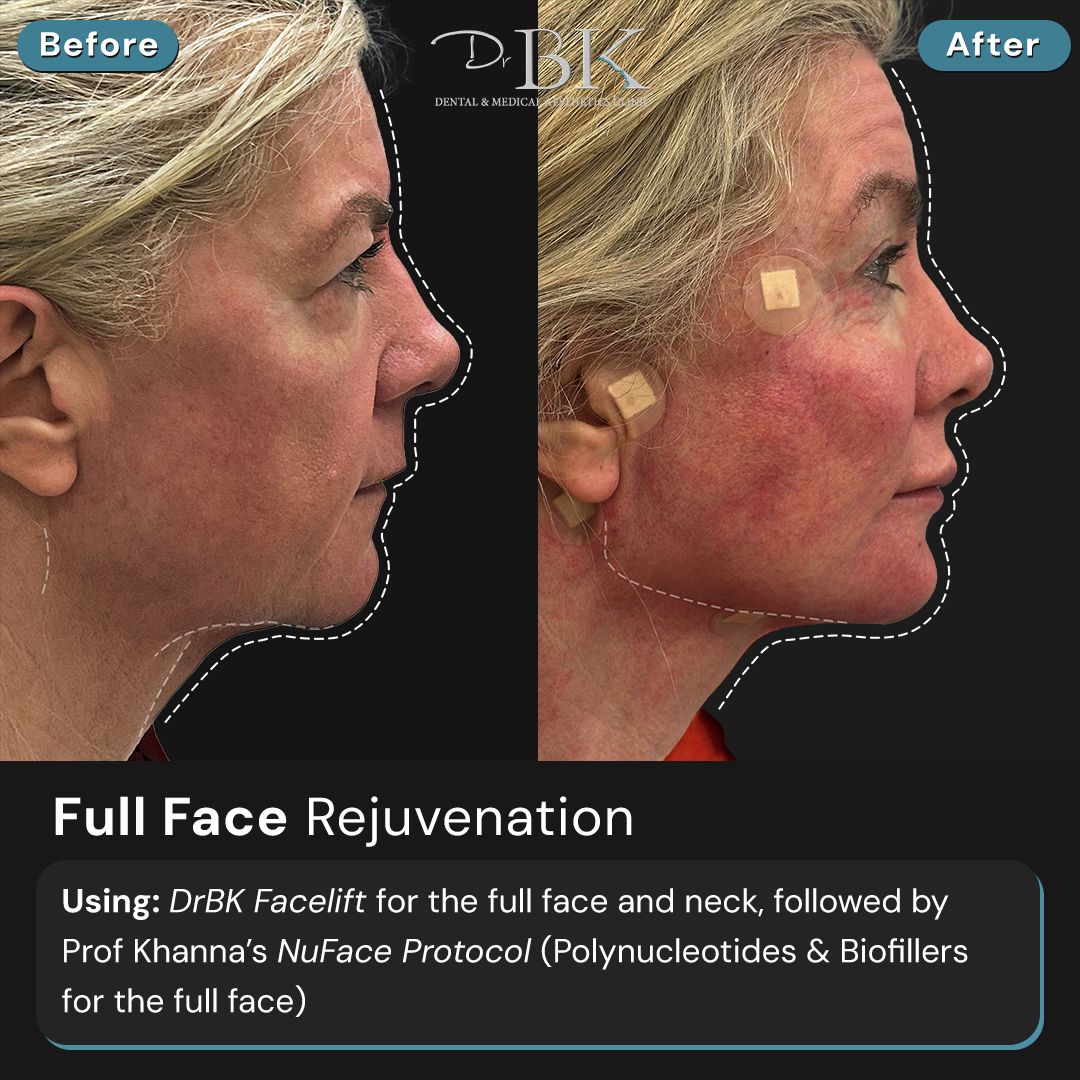
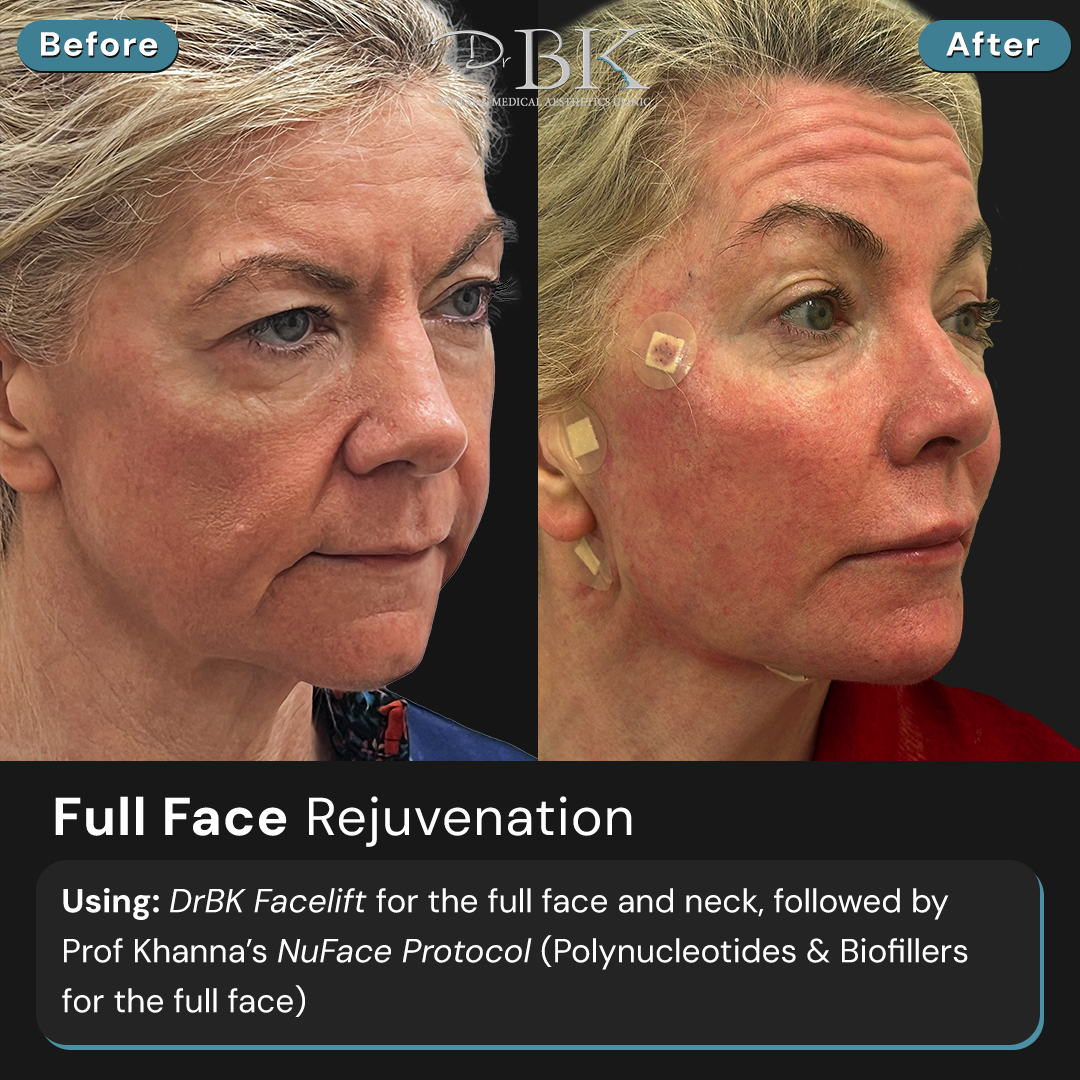
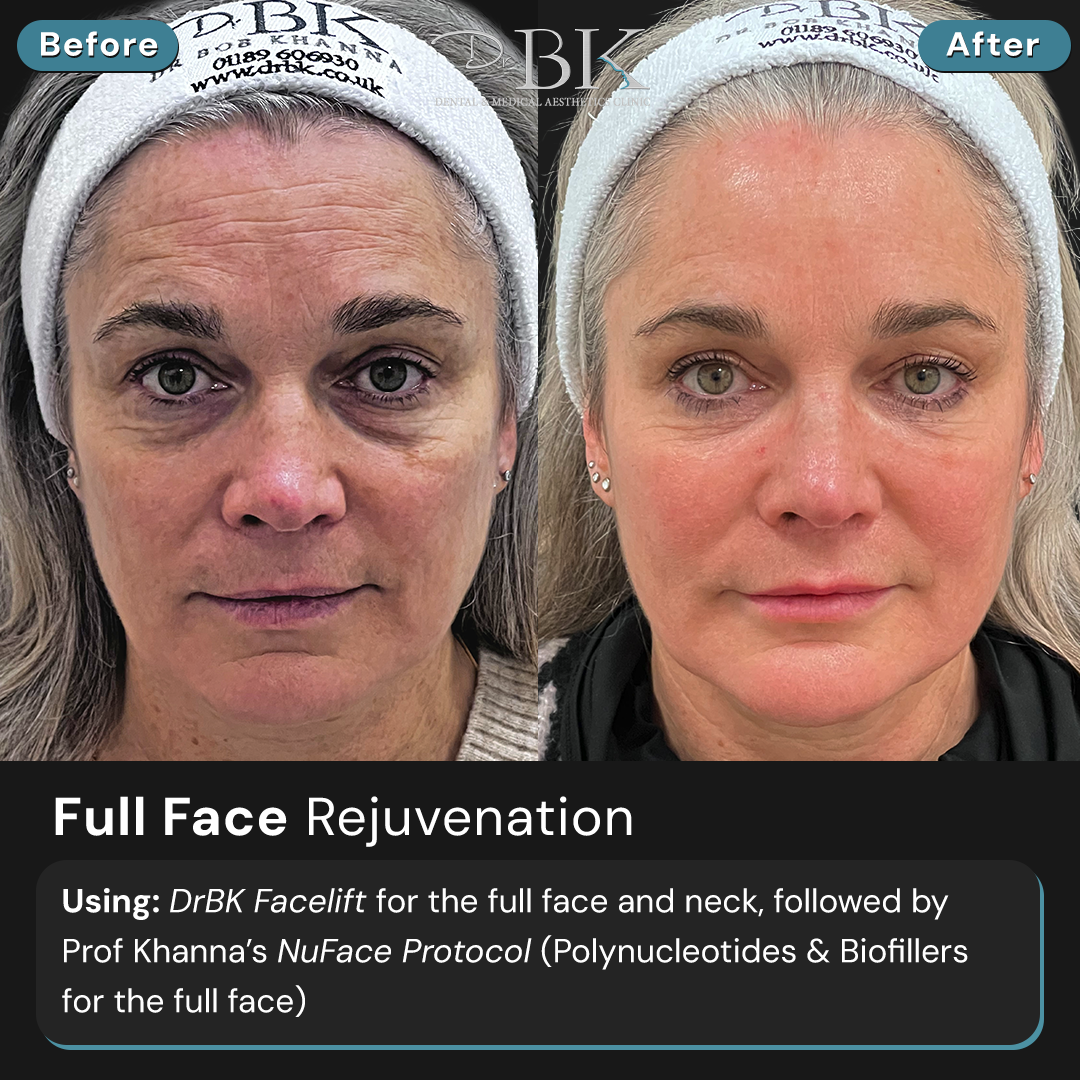
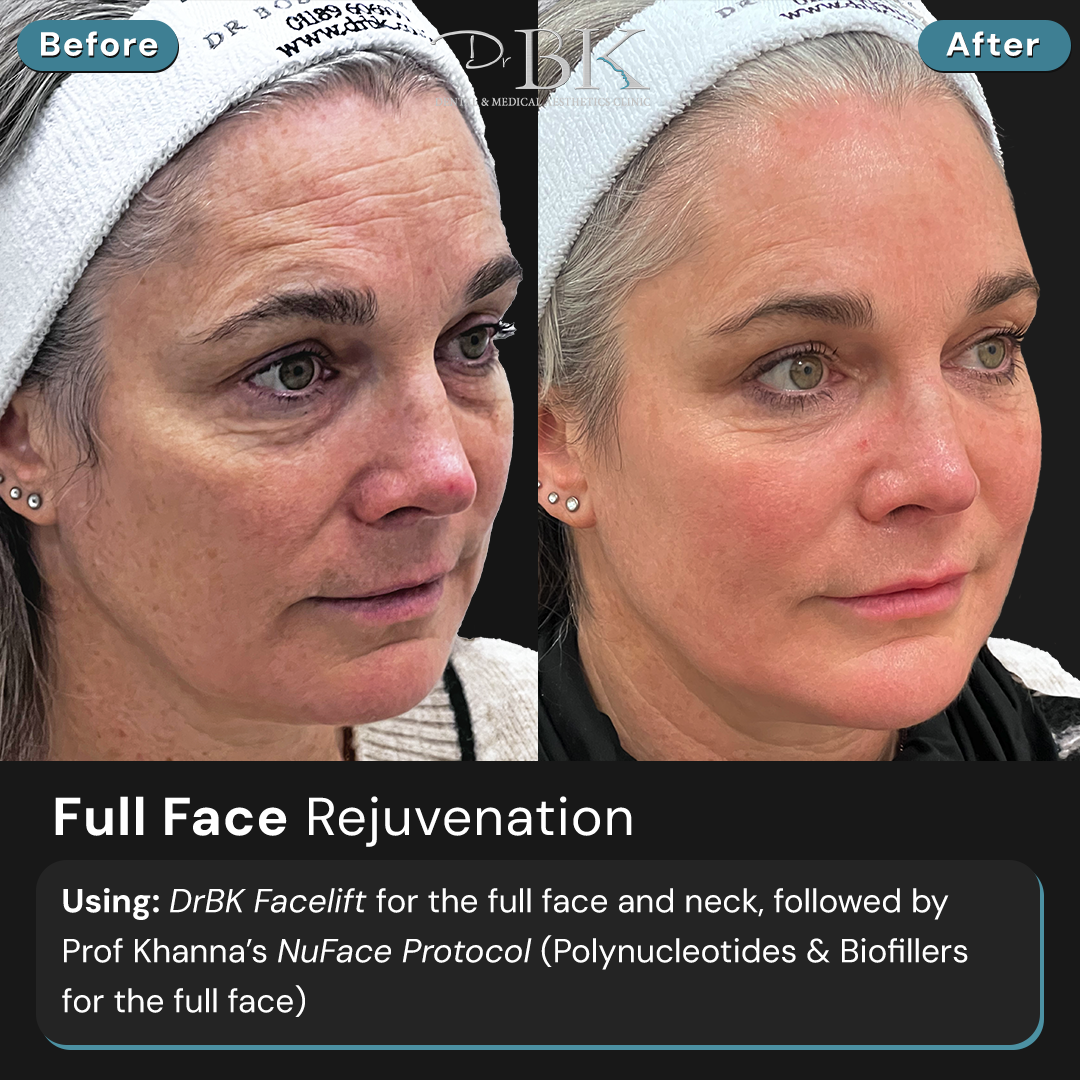
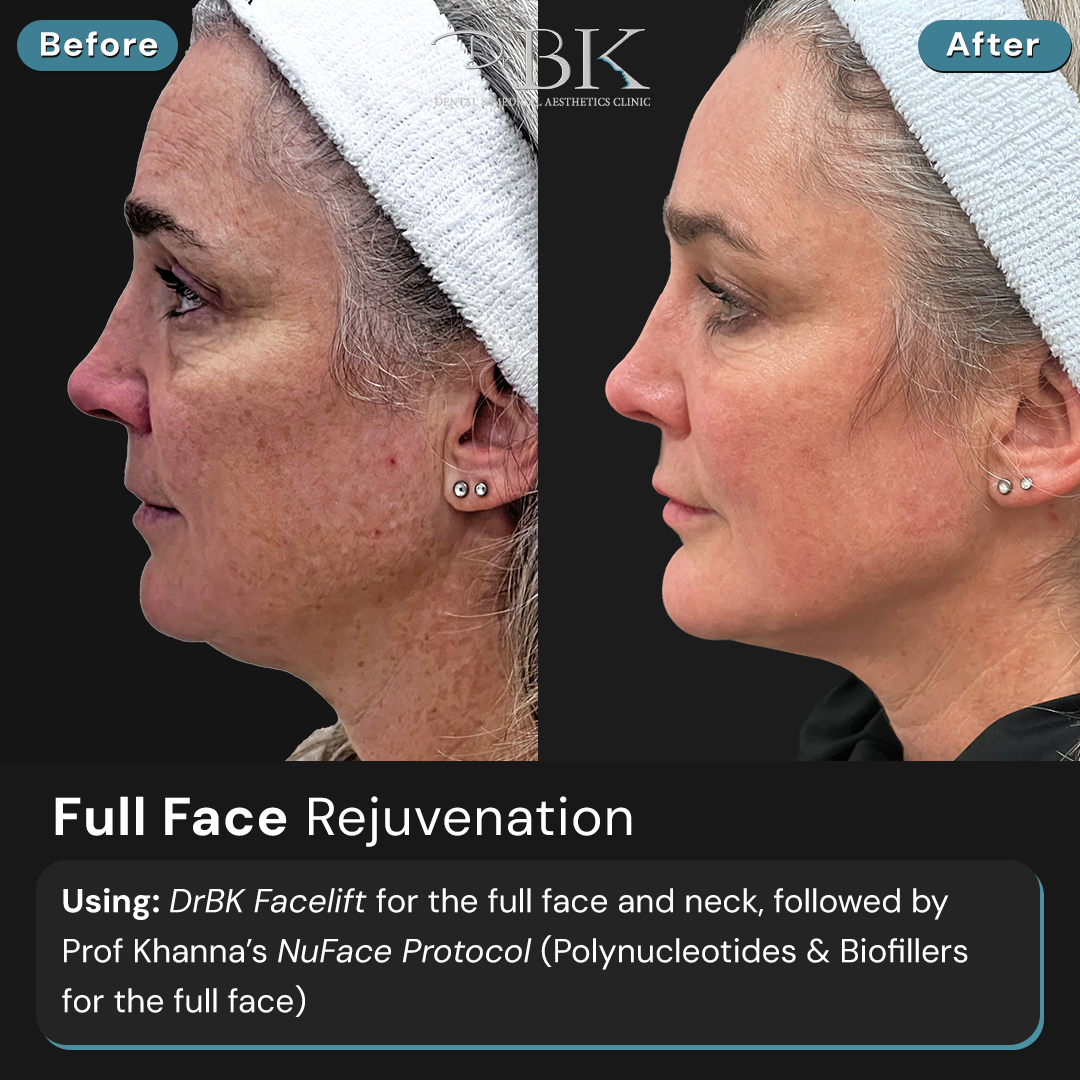
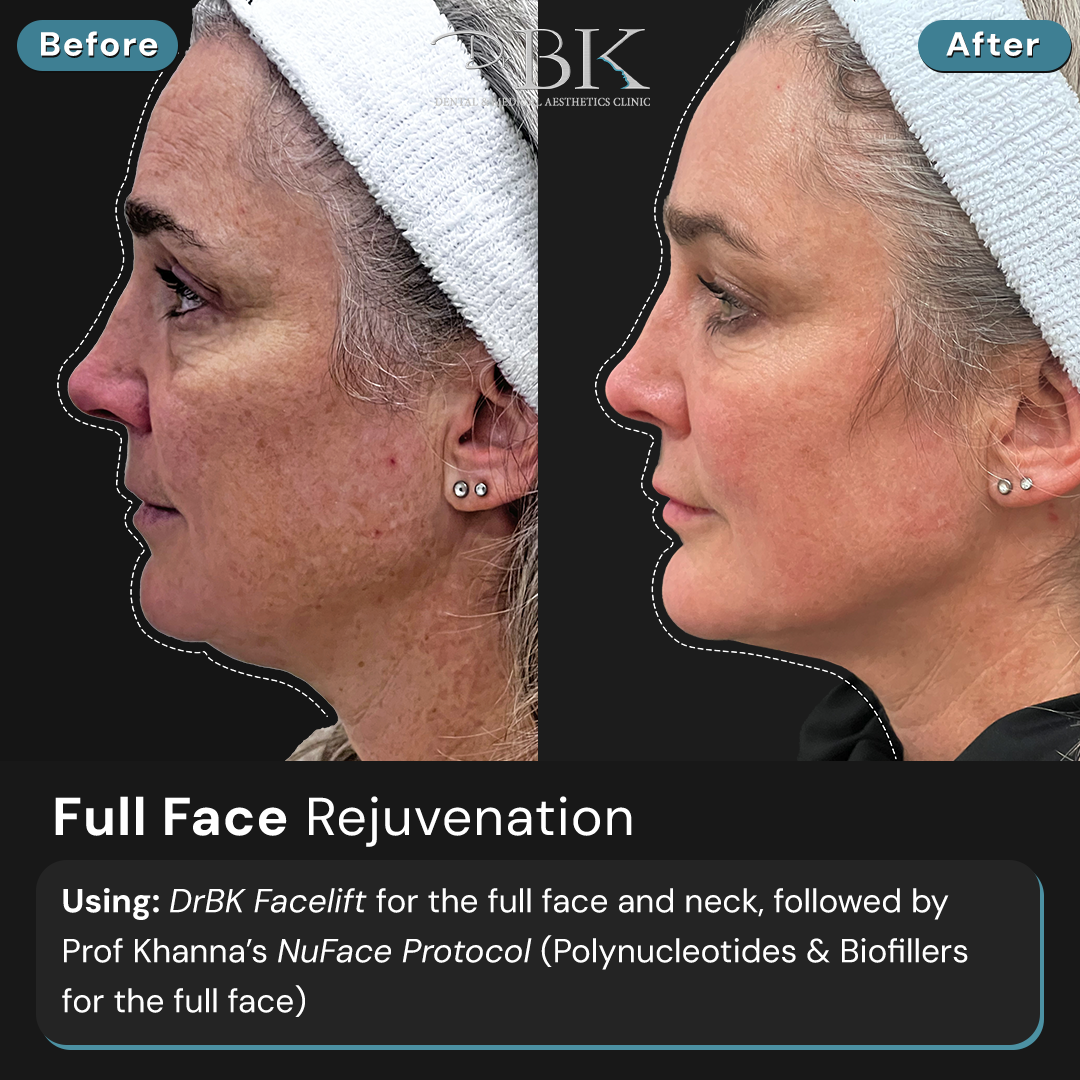
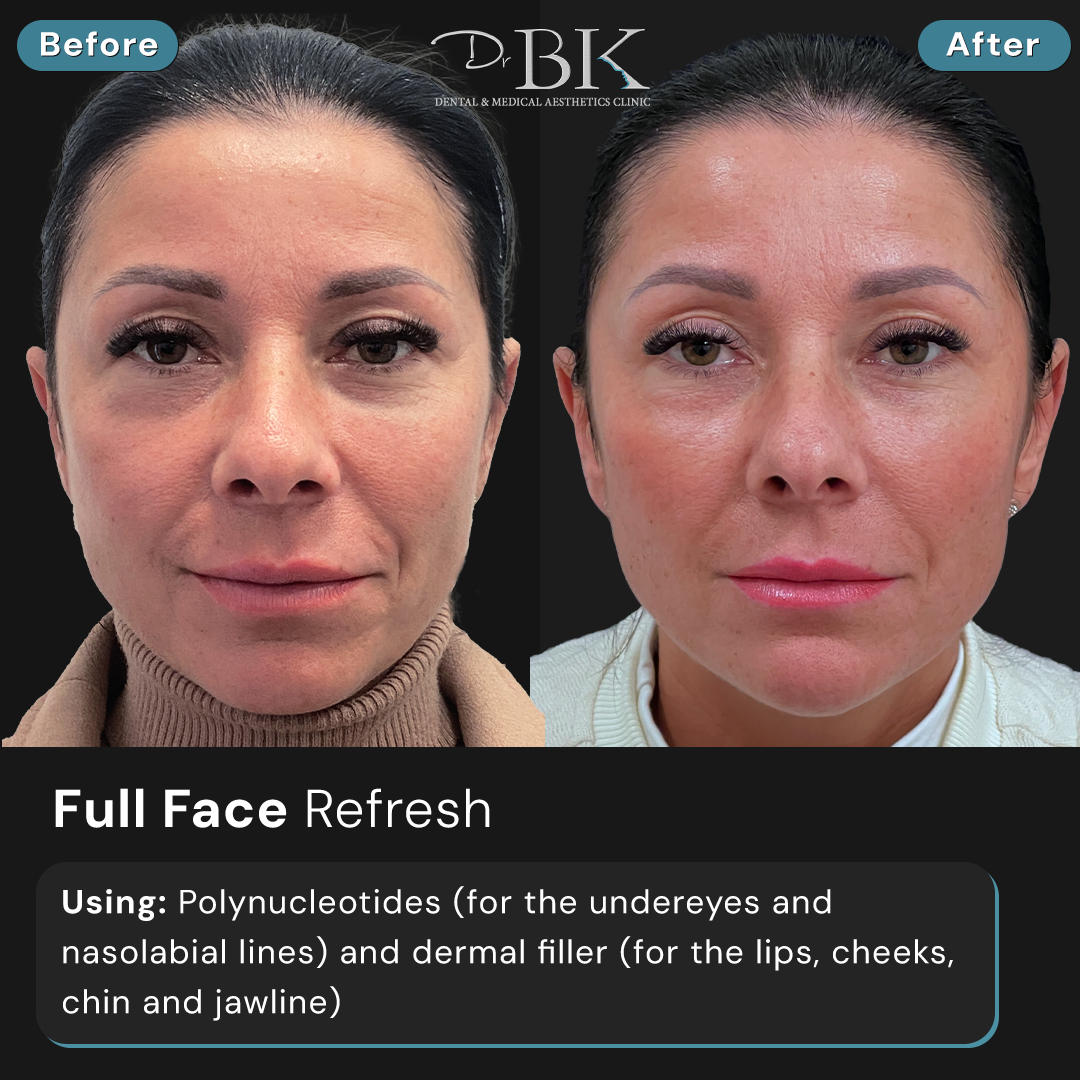
Polynucleotides before and afters
Do polynucleotides work?
Yes – polynucleotides are scientifically proven to
- Stimulate and boost collagen and elastin production
- Durably and efficiently repair the skin (and hair) at a cellular level
- Hydrate the skin at a cellular level
- Improve tissue firmness and elasticity
- Have anti-inflammatory properties
- Promote cellular renewal
Are you a suitable candidate for polynucleotides?
Most adults who want to improve their skin quality, reduce fine lines, or restore a more hydrated and radiant complexion are suitable candidates for polynucleotide treatment. It’s typically well tolerated across a wide range of skin types and ages.
Polynucleotide treatment is not recommended if you:
- Are pregnant or breastfeeding
- Have an active skin infection, cold sore, or inflammation at the intended treatment site
- Have a known allergy to fish or salmon-derived products
- Are taking blood-thinning medications (discuss at consultation)
- Have a history of keloid scarring (discuss at consultation)
Every patient receives an individual assessment at consultation. If polynucleotides are not the right option for you, we will recommend an alternative approach.
What to expect: the polynucleotides treatment experience at DrBK Reading / Harley St
Consultation
Your appointment begins with a full skin consultation. An experienced clinicians will assess your skin, discuss your concerns and goals, and explain the proposed treatment plan, including product choice, number of sessions, and expected outcomes.
Preparation
We offer a topical numbing cream to apply to the treatment area. Most patients find this sufficient; those who are already familiar with anti-wrinkle injections or filler often find numbing unnecessary.
Treatment
Polynucleotides are administered via fine-needle injection at multiple points across the treatment area. We use a layered injection technique, adapting depth and volume to each zone. A typical full-face session takes 20–30 minutes.
Side effects
Some redness, minor swelling, and small bumps at the injection sites are entirely normal. These typically resolve within 24–48 hours. You’ll be able to return to most daily activities immediately.
Polynucleotides aftercare
To protect your results and minimise the risk of side effects, we recommend the following for 48 hours after treatment:
- Avoid strenuous exercise, saunas, and steam rooms
- Avoid alcohol
- Avoid direct sun exposure and sunbeds; use SPF 50 if outdoors
- Do not apply make-up to treated areas for at least 24 hours
- Avoid touching or massaging the treated area
- Stay well hydrated
Full aftercare instructions will be provided at your appointment. If you experience any unusual swelling, significant bruising, or skin changes that concern you, contact the clinic.
Polynucleotide treatment FAQs
What are polynucleotides and how do they work?
Polynucleotides are long-chain nucleic acid molecules, predominantly derived from highly purified salmon DNA. They are biocompatible, biodegradable, and closely mimic the DNA structures in human tissue, which is why the body accepts them.
When injected into the skin, polynucleotides work by activating adenosine receptors on skin cells, which triggers a cascade of repair activity: it stimulates fibroblasts to produce collagen and elastin, promotes the formation of new blood vessels (known as angiogenesis), and encourages deep cellular hydration. The result is skin that’s firmer, smoother, and more resilient from the inside out.
As Professor Khanna explains:
“Polynucleotides are like food or medicine for cells, making them produce collagen and elastin and helping to improve the extracellular matrix, the structural support layer that keeps skin looking youthful.”
Sometimes, polynucleotides treatments are referred to as Biostimulators or Biorevitalisers (depending on the manufacturer and composition), but they all contain the core anti-ageing ingredient; polynucleotides.
How much is polynucleotide treatment?
Polynucleotide treatment sessions with us start at £578.
How long do polynucleotides take to work?
While most anti-ageing treatments take months to show improvements, you can see visible results from polynucleotide treatments within approximately 3 weeks, with full effects becoming more apparent over several months. The skin will gradually improve in texture, firmness and hydration.
How many sessions of polynucleotides do you need?
Usually 3 treatments, 4 weeks apart are required to achieve optimal results. A top up every 12 months is recommended to continue to enjoy the effects.
Are polynucleotides safe?
Yes, polynucleotides are considered very safe for facial aesthetic treatments. They are biocompatible molecules naturally found in the body and are carefully purified for cosmetic use.
Clinical studies have shown they are well-tolerated, with minimal risk of allergic reactions or side effects. As with any injectable treatment, it’s important to have them administered by a qualified professional to ensure the highest safety standards.
What's the difference between polynucleotides and dermal fillers?
Unlike dermal fillers that simply plump the skin temporarily, polynucleotides regenerate skin at the cellular level. They boost hydration, collagen production, and skin elasticity.
Do polynucleotide treatments hurt?
At DrBK, we offer optional numbing cream before the treatment for those that are sensitive to needles. However most patients, particularly those who are used to 'botox', fillers or microneedling, may feel they do not require numbing at all.
Which DrBK clinic offers polynucleotide treatments?
We offer polynucleotide treatments at both of our locations in Reading (Queens Road) and London (Harley St). Book now.
Book your polynucleotide treatment at DrBK Reading & London
Experience the power of regenerative science with Polynucleotides at DrBK Clinic in Reading or Harley St.